

E-invoicing in UAE is moving from discussion to implementation, and many businesses are only just starting to pay attention. At its core, e-invoicing replaces traditional invoice formats such as PDFs or paper with structured electronic data that can be shared and validated between systems.
This shift is being introduced under the direction of the Ministry of Finance to improve tax transparency, reduce reporting errors, and streamline VAT compliance. However, timelines, requirements, and technical details are still evolving, which can create uncertainty for businesses.
If you are wondering what is e invoicing in UAE, whether it applies to your business, and how to prepare, this guide explains the key points in a clear and practical way.
What Is E-Invoicing in the UAE?
To understand what is e invoicing in UAE, it helps to separate it from what most businesses already do today.
E-invoicing is not simply emailing a PDF invoice. It refers to the structured electronic exchange of invoice data in a standardized format, allowing systems to automatically read, process, and validate the information.
Under emerging UAE e-invoicing regulations, invoices are expected to be created in structured formats such as XML, with predefined fields including supplier details, VAT numbers, timestamps, and totals. These invoices are then transmitted through a regulated network rather than being sent manually.
The UAE is expected to adopt a framework based on Peppol, a global infrastructure used to securely exchange invoices between businesses and authorities. This enables:
- Machine-readable invoice data
- Faster validation, often near real-time
- Reduced manual errors
Oversight is expected to sit with the Federal Tax Authority, ensuring invoice data aligns with VAT reporting requirements.
In practical terms, invoicing becomes less about documents and more about standardized data flowing between systems.
Is E-Invoicing Mandatory in the UAE?
Once you understand how it works, the next question is straightforward: is e-invoicing mandatory in UAE?
At this stage, it is not yet fully mandatory, but a UAE e-invoicing mandate is expected to roll out in phases. Based on current announcements, implementation is anticipated to begin around e invoicing UAE 2026, although exact dates and scope are still being finalized.
What is confirmed:
- E-invoicing will become mandatory over time
- The rollout will follow a phased approach
- It will eventually apply to most VAT-registered businesses
What is still pending:
- Exact thresholds for which businesses are included first
- Final technical specifications for all users
- Detailed penalty frameworks
In most cases, larger businesses or high-volume taxpayers are expected to be included earlier, with SMEs following later. While some details are still awaiting official confirmation, businesses should assume they will fall within scope at some point.
The key takeaway: waiting for full clarity may limit your preparation time.
Key Timelines and Rollout Phases
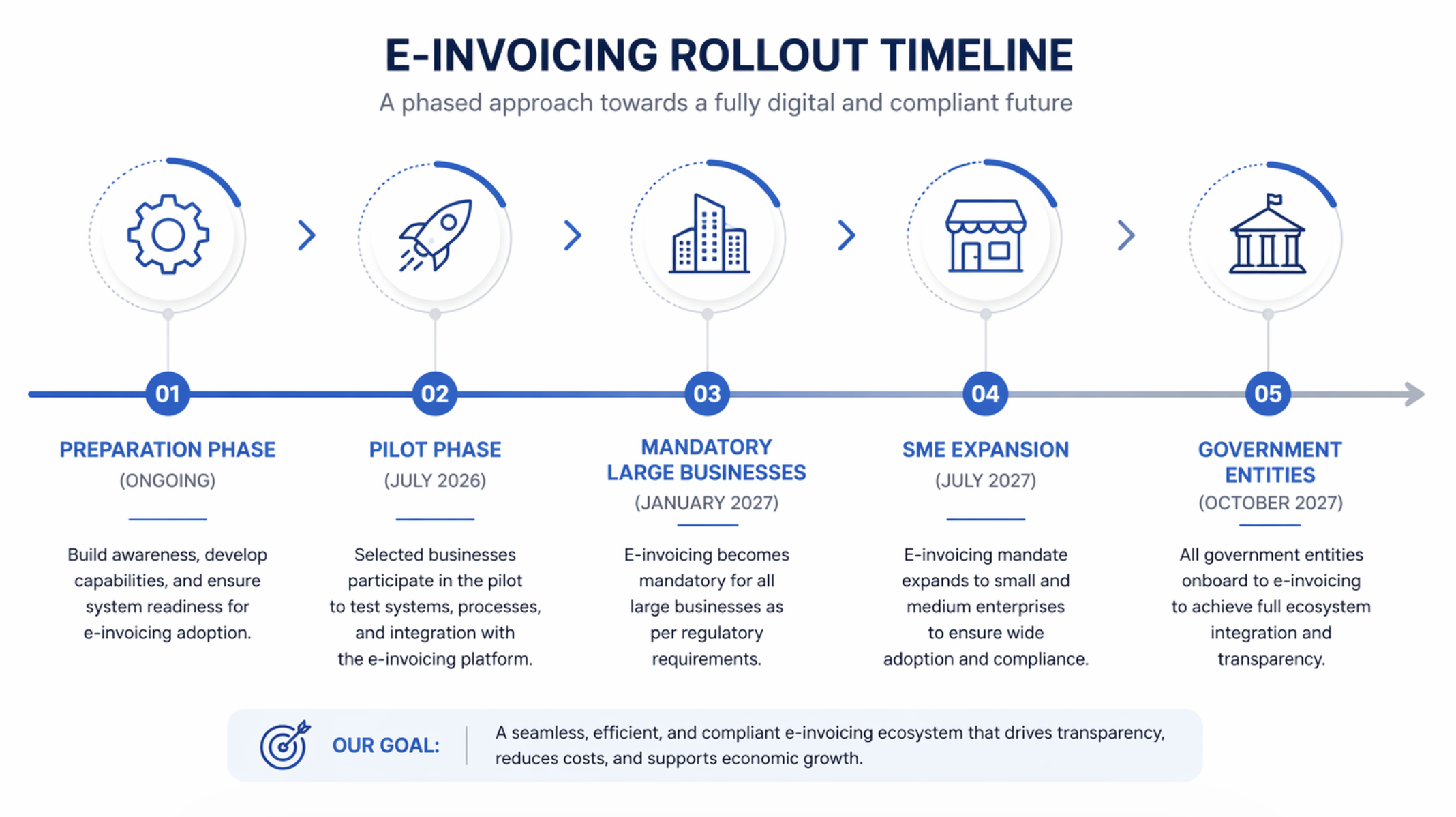
Understanding the rollout timeline helps you plan realistically. While UAE e-invoicing requirements are still being refined, the overall structure now follows a confirmed phased implementation between 2026 and 2027.
| Phase | Who is affected | Expected date | Status |
|---|---|---|---|
| Preparation Phase | All businesses (indirectly) | Ongoing | Confirmed |
| Pilot Phase | Selected businesses (invited participants) | 1 July 2026 | Confirmed |
| Phase 1: Mandatory (Large Businesses) | Businesses with revenue ≥ AED 50 million | 1 January 2027 | Confirmed |
| Phase 2: Expansion (SMEs) | Businesses with revenue < AED 50 million | 1 July 2027 | Confirmed |
| Phase 3: Government Entities | Government entities and related transactions | 1 October 2027 | Confirmed |
What this means in practice
- The preparation phase is already underway, even without enforcement
- Early phases are expected to focus on businesses with higher transaction volumes
- Full implementation is expected to happen gradually over several years
Because UAE e-invoicing regulations are still evolving, these timelines should be treated as directional guidance rather than fixed deadlines.
These timelines matter because they affect how soon you need to update your systems and processes.
How E-Invoicing Affects Your Systems and Processes?
The move to UAE e-invoicing will require changes beyond how invoices look. It affects how invoices are created, processed, and validated.
ERP and Accounting Systems
Your current system should be able to:
- Generate structured invoice data, not just PDFs
- Support standardized formats
- Connect with external platforms or service providers
Older systems may require upgrades or additional integrations to meet UAE e-invoicing requirements.
Accredited Service Providers (ASPs)
Businesses are expected to work with Accredited Service Providers (ASPs). These are authorized intermediaries that:
- Transmit invoice data through the network
- Validate invoice formats
- Support compliance with UAE e-invoicing regulations
They act as the link between your internal system and the wider framework.
Data and Workflow Changes
E-invoicing introduces stricter data requirements:
- Standardized invoice fields
- Reduced manual intervention
- Automated validation before submission
This reduces errors but requires more accurate and consistent internal data.
Operational Impact
- Finance teams will follow updated workflows
- IT teams may manage system integrations
- Internal controls should ensure data accuracy
If systems are not prepared, businesses may face:
- Rejected invoices
- Payment delays
- Disruptions to operations
In practical terms, invoicing becomes a system-driven process rather than a manual task.
Steps to Get Business-Ready
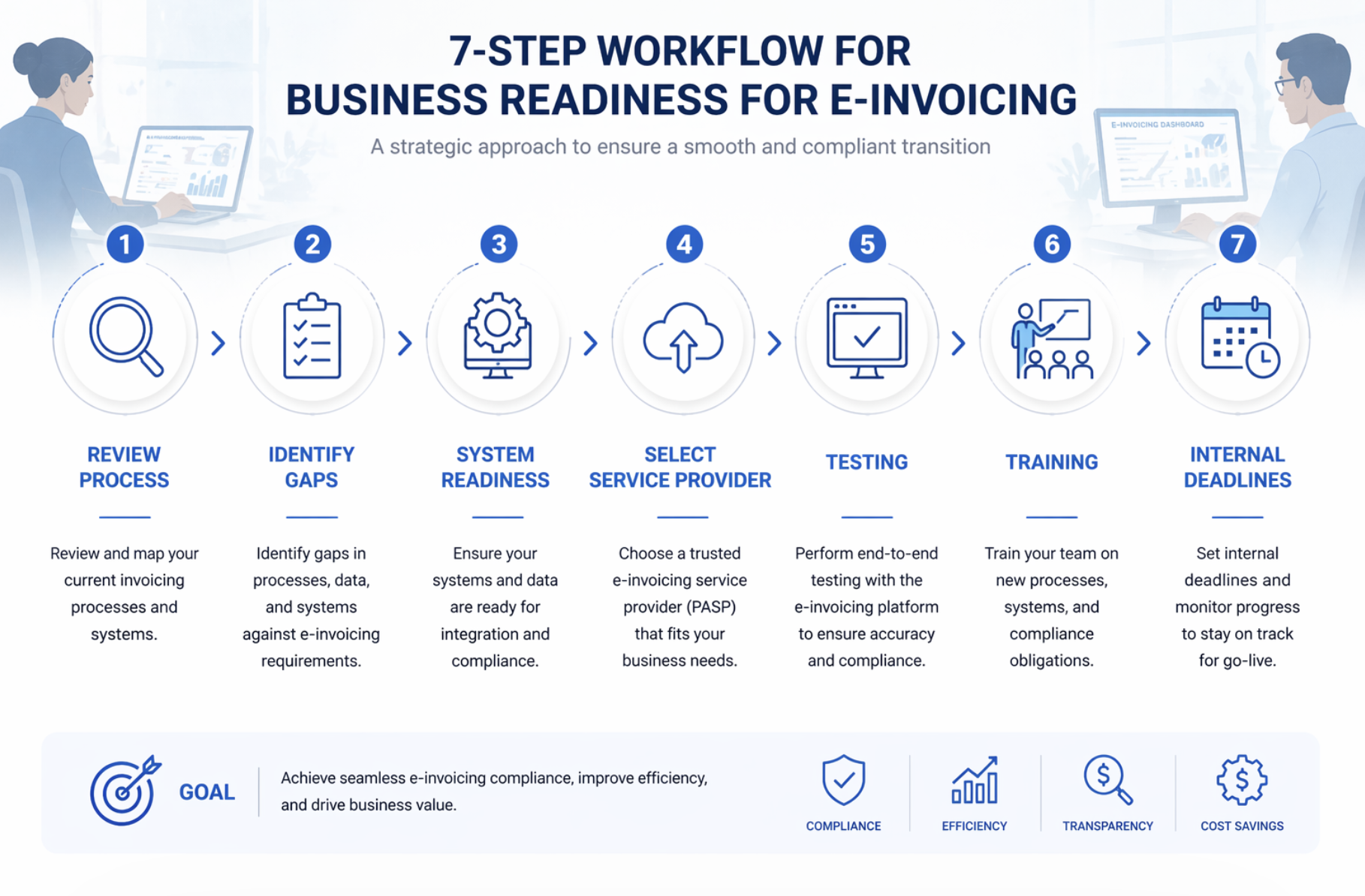
Preparing early for e-invoicing in UAE helps avoid rushed changes later. Here is a practical approach you can start with.
1. Review Your Current Invoicing Process
Review how invoices are created, approved, and sent. Identify whether your process is manual, partially automated, or fully digital.
2. Identify Gaps
Compare your current setup with expected UAE e-invoicing requirements.
- Check if all required data fields are captured
- Confirm whether your data is structured or document-based
3. Assess System Readiness
Check if your ERP or accounting system can:
- Generate structured invoice formats
- Integrate with external platforms or service providers
If not, upgrades or additional tools may be required.
4. Select an Accredited Service Provider (ASP)
Businesses are expected to work with Accredited Service Providers (ASPs) under the UAE e-invoicing framework. Select a provider that fits your business size and transaction volume.
5. Test Your Setup
Run pilot transactions to:
- Validate invoice data
- Check system integration
- Identify issues early
6. Train Your Teams
Ensure finance and operations teams understand:
- Updated workflows
- Data requirements
- System usage
7. Set Internal Deadlines
Do not rely only on official rollout timelines. Set internal milestones ahead of expected implementation phases, including those anticipated from 2026.
Starting early gives you more flexibility and reduces the risk of disruption during implementation.
FREQUENTLY ASKED QUESTIONS
Is e-invoicing mandatory in the UAE?
Not yet fully, but it is expected to be introduced in phases. The UAE e-invoicing mandate is anticipated to begin around 2026, based on current direction from the Ministry of Finance. Early phases are expected to include selected business groups before expanding further. Most VAT-registered businesses are expected to be included over time, although final scope and timelines remain subject to confirmation.
Does e-invoicing replace VAT returns?
No. Businesses will still need to file VAT returns with the Federal Tax Authority. E-invoicing supports reporting processes and improves data accuracy, but it does not replace existing VAT filing obligations.
What is an Accredited Service Provider (ASP)?
An Accredited Service Provider (ASP) is an approved intermediary within the UAE e-invoicing framework. ASPs are expected to operate under guidelines set by the Ministry of Finance and relevant authorities. They transmit and validate invoice data, helping ensure invoices meet UAE e-invoicing regulations and are processed correctly through the system.
What if I use cloud accounting software?
Cloud systems can support e-invoicing adoption, but they may still require configuration updates and integration with an ASP. Using cloud software does not automatically mean your business is compliant with UAE e-invoicing requirements. Businesses should assess whether their systems align with the expected framework issued by the Federal Tax Authority.
What are the penalties for non-compliance?
Detailed penalties have not yet been fully defined. The UAE authorities, including the Federal Tax Authority, have not issued final guidance on penalty structures for e-invoicing. Businesses should monitor official updates to understand future compliance requirements.
Preparing for What's Next
Preparing for e-invoicing in UAE is not only about meeting compliance requirements. It is about reducing disruption when the framework is implemented. With phased implementation expected from 2026, early planning allows businesses to adjust systems, processes, and internal workflows in a structured way.
At MP Elites, we support businesses across VAT, indirect tax, and compliance readiness. We help translate regulatory changes into clear and practical actions. If you need clarity on how UAE e-invoicing may apply to your business, seeking professional guidance can help you prepare in advance.